

 En
En  Français
 Deutsch
 عربى
عربىSelecting the perfect bedding is a critical procurement decision that impacts guest satisfaction, operational efficiency, and brand reputation. For industry buyers, the distinction between a standard product and a high-performance solution lies in the engineering details. This guide provides a technical deep-dive into the specifications, material science, and quality assurance protocols essential when sourcing white duvet full queen units for hospitality, healthcare, or high-volume residential applications.
Zipper Closure Duvet Covers: Engineering Accessibility and Durability
The closure mechanism is a primary failure point in duvet covers. For institutional use, the white duvet cover full queen with zipper offers superior life-cycle performance compared to buttons or ties. The global duvet covers market, projected to reach $18.25 billion by 2032, sees zipper closures dominating the premium segment due to their reliability .
Why Zippers Outperform Buttons and Ties in Contract Use?
In high-turnover environments like hotels, laundry efficiency is paramount. Buttons break or detach, and ties deteriorate with repeated washing. A zipper provides a low-profile, secure closure that withstands commercial laundry cycles.
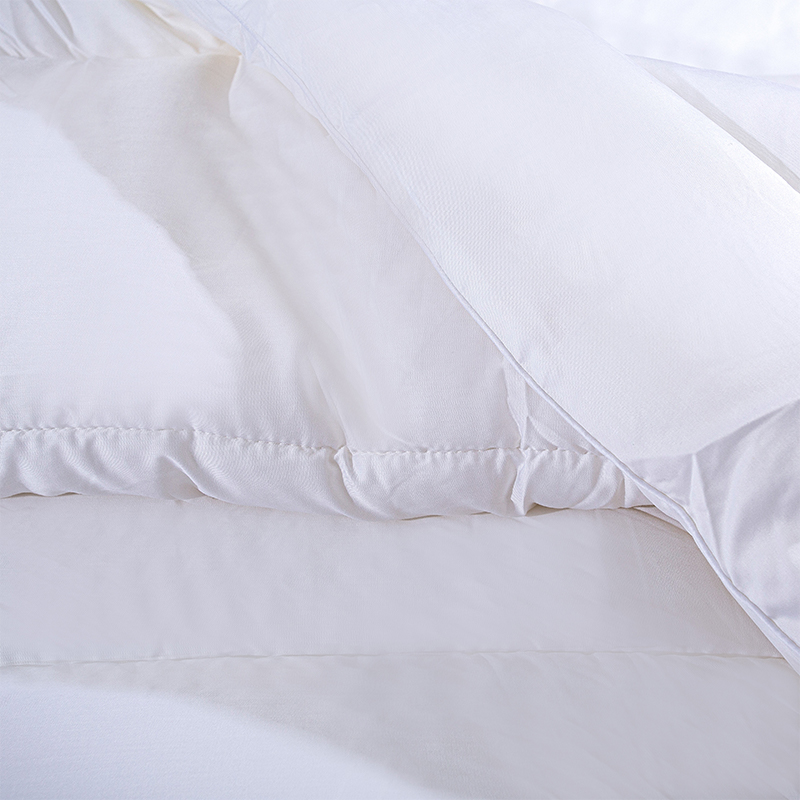
Comparative Analysis: Duvet Cover Closure Systems
The following table breaks down the technical and operational differences between common closure types found in white duvet cover full queen with zipper specifications and their alternatives.
| Closure Type | Mechanical Failure Rate | Impact on Laundry Cycle | Protective Feature |
|---|---|---|---|
| Zipper (with placket) | Low (metal/coil fatigue after 100+ cycles) | Minimal snagging; remains securely closed | Zipper placket protects adjacent fabrics |
| Button | High (button loss, buttonhole fraying) | High risk of catching and tearing in machines | None; buttons exposed to abrasion |
| Tie (Fabric) | Medium (ties knot, fray, or detach) | High; ties tangle with other items | Minimal |
Technical Specifications for High-Performance Zipper Systems
To ensure the white duvet cover full queen with zipper meets B2B quality standards, procurement specifications must include:
- Zipper Type: Self-repairing coil zipper is preferred over molded tooth zippers for better flexibility and resistance to laundry damage.
- Sliding Mechanism: Auto-locking slider prevents the zipper from opening during use.
- Placket Design: An internal and external zipper placket (fabric flap) is non-negotiable. It prevents the sleeper from feeling the cold metal and protects the zipper from direct contact with the skin or other fabrics.
- Material: YKK or equivalent branded zippers with anti-corrosion coating on metal components to withstand bleach and industrial detergents.
Stain-Resistant Technology in White Duvet Inserts
Maintaining the pristine look of white bedding is a significant operational challenge. This is where stain resistant white duvet insert full queen products, engineered with textile chemistry, provide a tangible ROI by reducing replacement frequency and harsh chemical spot-treatments.
The Physics and Chemistry of Fluid Repellency
Stain resistance is achieved through nano-scale engineering of the fabric's surface energy. Modern treatments move beyond simple coatings.
- Fluorocarbon/PFAS-Free Barriers: The industry is shifting toward bio-based or silicone polymer finishes that create a physical barrier, reducing the fabric's surface energy so liquids bead up (the "lotus effect") rather than penetrating the weave.
- Mechanism: These treatments fill the microscopic spaces between fibers, preventing aqueous and oil-based stains from bonding with the cellulose or synthetic fibers.
- Durability: For contract use, the finish must be "durable" (DWR - Durable Water Repellent), meaning it withstands multiple industrial washes (typically 20-30 cycles) before efficacy diminishes.
Performance Metrics: Stain Resistance vs. Breathability
A common concern is that chemical treatments create a "plastic" barrier, trapping heat. High-end engineering resolves this paradox.
- Moisture Vapor Transmission Rate (MVTR): Quality stain resistant white duvet insert full queen shells maintain a high MVTR, allowing perspiration vapor to escape while blocking liquid ingress.
- Hand Feel: Advanced application techniques ensure the finish is integrated into the fiber structure at the molecular level, rather than coating the surface, preserving the natural softness of the cotton or microfiber shell. This is critical for guest experience.
Maintenance Protocols for Engineered Finishes
- Detergent Selection: Avoid harsh alkaline detergents or bleach, which accelerate the breakdown of fluorocarbon-free barriers.
- Heat Activation: Some modern finishes require occasional tumble drying at medium heat to "reactivate" the molecular structure of the repellent barrier, similar to performance outerwear.
- Inspection: Regularly test water repellency. When water no longer beads, the functional life of the treatment is ending, and the unit may need replacement or re-application by a specialized launderer.
Down Alternative Fill: The Science of All-Season Thermal Regulation
For buyers managing allergy risks or seeking vegan-certified lines, the white down alternative duvet full queen all-season category offers solutions where material science replaces animal products. The global down-alternative market is projected to grow at a 4.3% CAGR through 2034, driven by innovations in fiber technology .
Deconstructing "Down-Alternative": Beyond Basic Poly-Fil
The term "down-alternative" covers a wide spectrum of engineered fibers. Basic polyester fill is being replaced by advanced hollow-core and siliconized fibers.
- Hollow-Core Fibers: These fibers contain a central air channel, trapping still air to provide thermal insulation without weight, mimicking the structure of natural down.
- Siliconized Fibers: A coating of silicone oil is applied to each staple fiber. This adds lubricity, allowing the fibers to slide past each other rather than matting down, which dramatically improves the fill's "loft" and resilience.
- Recycled Content: High-end white down alternative duvet full queen all-season inserts now utilize rPET (recycled polyethylene terephthalate) from post-consumer bottles, requiring Global Recycled Standard (GRS) certification for verifiable supply chains .
Comparative Analysis: Down vs. Advanced Down-Alternative
When evaluating white down alternative duvet full queen all-season against natural down for B2B procurement, consider these factors:
| Property | Premium Down (700+ Fill Power) | Advanced Down-Alternative (Siliconized Hollow-Core) | Implication for Buyer |
|---|---|---|---|
| Warmth-to-Weight Ratio | Excellent (High loft, low weight) | Good to Excellent (Heavier for same warmth) | Down is lighter; alternative may feel more substantial. |
| Allergen Potential | Low (if RDS certified & hyper-washed) but not zero | Zero (Hypoallergenic by material composition) | Alternative is safer for institutional allergy protocols. |
| Moisture Management | Hydrophilic (absorbs moisture, slow drying) | Hydrophobic (resists moisture, fast drying) | Alternative dries faster, resisting microbial growth. |
| Launderability | Delicate; risk of clumping; requires precise drying | High; machine-washable; quick-drying | Alternative offers significantly lower laundry OPEX. |
Defining "All-Season" via Thermal Resistance (Tog)
The "all-season" designation is defined by the duvet's thermal resistance, measured in Tog. An all-season white down alternative duvet full queen typically targets a mid-range Tog value (approx. 4.5 Tog in the UK/EU system, or a medium weight in the US). This specification is engineered to be suitable for ambient room temperatures between 65-75°F (18-24°C), providing a "neutral" baseline that requires neither heating nor cooling intervention from the user.
Hotel-Quality Specifications: Engineering the Guest Experience
The term hotel quality white duvet full queen is not marketing jargon; it refers to a specific set of measurable performance standards engineered for durability, comfort, and aesthetics under heavy-use conditions.
Deconstructing the "Hotel Quality" Specification
Meeting the demands of the hospitality sector requires a specific engineering approach that goes beyond residential-grade products.
Construction: Baffle-Box vs. Sewn-Through
- Sewn-Through: The top and bottom shells are stitched directly together. This creates "cold spots" at the stitch lines where there is no fill. It is cost-effective but thermally inefficient and prone to fill migration.
- Baffle-Box: A fabric "gusset" is sewn between the top and bottom shells, creating a three-dimensional box. This allows the fill to fully expand to its maximum loft, eliminating cold spots and ensuring even heat distribution. This is the non-negotiable standard for true hotel quality white duvet full queen construction .
Shell Fabric: The Role of Thread Count and Weave
- Thread Count: For hotel quality, a range of 300-500 thread count is the "sweet spot." This provides durability without the excessive density that can trap heat or cause fill to drift .
- Weave Type:
- Percale (200-400 TC): A crisp, matte finish, highly breathable, and durable. Ideal for hot sleepers and warm climates .
- Sateen (300-600 TC): A silky-smooth, lustrous finish with a heavier drape. It sleeps slightly warmer and offers a luxurious hand feel .
Fill Power and Insulation Performance
Whether down or down-alternative, the fill's performance is quantified by its "loft." Higher fill power indicates better insulating efficiency.
- 600-700 Fill Power: Good quality, suitable for mid-range hotels.
- 700-800+ Fill Power: Excellent quality, found in luxury properties. It provides maximum warmth with minimum weight .
Recent studies highlight that while down is exceptional, alternative materials are closing the gap. For instance, wool has been shown to outperform both synthetic and down fill in moisture management, moving moisture up to 153% faster, which is a critical factor in perceived comfort and hygiene .
Washable Duvets with Corner Tabs: The Pinnacle of Life-Cycle Engineering
The convergence of convenience and structural integrity is found in the washable white duvet full queen with corner tabs. This product category is engineered specifically to withstand the mechanical stress of repeated laundering while enhancing the user interface with the duvet cover.
The Engineering of Washability: Withstanding Mechanical Stress
A standard duvet may not survive the agitation of industrial or even home washing machines. A truly washable duvet is engineered differently.
- Shell Integrity: The shell fabric must have a high tensile strength and be pre-treated to resist shrinkage. TÜV SÜD certification protocols, for example, measure dimensional changes in length and width after six wash cycles; optimal performance (rated 5 points) requires less than 1% change .
- Anti-Clumping Fill: The fill material (especially down-alternative) must be treated or constructed to resist wetting out and clumping. This is achieved through silicone coating of fibers or using continuous filament fibers that don't shift as easily as staple fibers.
- Seam Construction: Double-needle or flat-felled seams provide the structural integrity to prevent fill leakage (fiber migration) during the torsional forces of a washer. TÜV SÜD standards for fill leakage are critical, rating "No leakage" as the top 5-point score .
Washing Protocol for Institutional Durability
- Machine: Use a large-capacity front-loading machine (commercial size preferred) to allow the duvet to move freely .
- Cycle: Cold water, gentle cycle. High heat degrades fibers and finishes .
- Detergent: Mild liquid detergent; avoid bleach and fabric softeners which clog pores and damage water-repellent coatings.
- Drying: Low heat is critical. Tumble with dryer balls to physically break up clumps and restore loft by redistributing the fill .
Corner Tabs: A Mechanical Fastening System
The washable white duvet full queen with corner tabs includes these small textile loops for a critical operational reason: they prevent the internal shifting that causes premature wear.
- Mechanical Function: When the duvet cover's internal ties are secured to the duvet's corner tabs, the two components become a single mechanical unit. This prevents the duvet from bunching up inside the cover.
- Reduced Friction: By eliminating relative movement between the duvet and cover, corner tabs dramatically reduce internal abrasion. This protects both the cover's inner surface from pilling and the duvet's shell from wear, extending the life cycle of both components.
- Operational Efficiency: For housekeeping staff, corner tabs simplify the making of a bed, ensuring the insert is perfectly aligned with the cover every time.
Frequently Asked Questions (FAQ)
1. What is the optimal thread count for a full queen duvet shell intended for contract use?
The optimal range is 300 to 500 thread count. A percale weave (200-400 TC) offers durability and breathability, while a sateen weave (300-600 TC) provides a softer, more luxurious hand feel but may retain more heat. For B2B applications, the durability and breathability of a high-quality percale in the 300-400 TC range is often the most practical and guest-friendly specification .
2. How do I verify the quality and safety of down and down-alternative fill at a material level?
Procurement specifications should mandate third-party certifications. For down, look for Responsible Down Standard (RDS) or Global Traceable Down Standard (Global TDS) to ensure ethical sourcing. For all materials, OEKO-TEX Standard 100 certification is essential; it verifies the product has been tested against a list of over 1,000 regulated and non-regulated harmful substances . For recycled synthetics, require Global Recycled Standard (GRS) certification .
3. What technical tests define a "washable" duvet for institutional laundry?
A truly washable duvet must undergo rigorous testing based on standards like EN 1167. Key metrics include: Dimensional stability (less than 2-3% shrinkage after multiple washes), fill leakage (zero to very minimal fiber migration after 10+ washes), and loft recovery (the ability of the fill to re-expand to near-original height after drying). TÜV SÜD certification provides a clear framework for these tests, rating products on a scale from 1 (unsuitable) to 5 (optimal) for these parameters .
4. How does the thermal performance of a "down alternative" compare to natural down?
While natural down (especially high fill-power) offers the best warmth-to-weight ratio, advanced down-alternative fills (such as siliconized hollow-core fibers) provide comparable insulation. The key trade-off is weight: down-alternative needs to be denser to achieve the same Tog rating. However, down-alternative excels in areas down cannot, such as being inherently hypoallergenic, hydrophobic (fast-drying), and highly machine-washable . For moisture management, some natural fills like wool actually outperform both down and synthetics in moving vapor away from the body .
5. What are the environmental and health implications of stain-resistant finishes on bedding?
Traditional stain-resistant finishes often relied on long-chain fluorocarbons (PFCs), which are persistent environmental pollutants. The industry standard is shifting toward PFAS-free or PFC-free finishes. These use alternative chemistries, such as dendritic polymers or silicone-based technologies, to create a water- and oil-repellent barrier without the environmental persistence. When sourcing stain resistant white duvet insert full queen products, explicitly request PFAS-free certifications to align with modern sustainability and health standards.
References
- Future Market Report. (2025). Duvet Covers Market Size, Share & Industry Analysis, By Type By Closure Type... Retrieved from
- Accio. (2025). Home Trends Down Alternative Comforter: Market Overview & Consumer Feedback Analysis. Retrieved from
- TÜV SÜD Product Service. (2026). Certification mark for duvets: Body comfort, hazardous substances, mechanical durability. Retrieved from
- Texfash. (2026). Study Finds Wool-Filled Duvets Insulated Better Than Synthetic, Feather-and-Down and Down in Controlled Tests. Retrieved from
- Popular Mechanics. (2022). 8 Best Duvet Inserts for a Great Night‘s Sleep: A Primer on Key Terms. Retrieved from
- White Cliff Studio. (n.d.). Bedding - Duvets, Sheets & Quilts: Understanding Thread Count, Weave Types, and Sizing. Retrieved from
- E-Cloth. (2025). DIY Cleaning Methods for Duvets: How to Wash and Dry. Retrieved from
- Accio. (2025). On Trend Duvet Covers: Market Overview & Consumer Trends. Retrieved from
- Ti Group. (n.d.). Home Textile Products Testing: GB/T 22796-2021, QB/T 1193-2012, and Certification Standards. Retrieved from
- Casper. (2025). Down vs. Down Alternative Bedding: Comparison & How to Choose. Retrieved from

 +86-18268324012
 +86-573-88798908
 Iris@zjmkn.com
 233 Huashi East Road, Wuzhen Town, Tongxiang City, Jiaxing, Zhejiang Province, China
