

 En
En  Français
 Deutsch
 عربى
عربىA winter duvet queen is engineered to provide thermal insulation, moisture control, and long-term durability during cold seasons. For distributors, hospitality buyers, and bedding wholesalers, understanding fill materials, TOG ratings, breathability, and hypoallergenic treatments is critical to selecting the right specification for different markets.
Heavy Winter Duvet Queen Size for Cold Weather
What Defines a heavy winter duvet queen size for cold weather?
A heavy winter duvet is designed with higher fill weight and superior loft to trap more air, which improves insulation efficiency. Compared with lightweight duvets, heavy winter versions retain body heat more effectively in bedrooms below 15°C (59°F).
- High fill weight (400–700 GSM depending on material)
- Greater loft for improved thermal retention
- Enhanced edge stitching to prevent cold spots
- Box or baffle construction for even fill distribution
| Feature | Standard Duvet | Heavy Winter Duvet |
| Fill Weight | 200–350 GSM | 400–700 GSM |
| Thermal Insulation | Moderate | High |
| Best For | Mild Climate | Cold Weather Regions |
Who Should Choose Heavy Winter Options?
- Cold sleepers with low heat retention
- Homes with limited heating
- Hospitality projects in alpine or northern regions
Goose Down Winter Duvet Queen
Why Choose a goose down winter duvet queen?
Goose down offers exceptional warmth-to-weight ratio due to its three-dimensional cluster structure. Compared with synthetic fibers, down traps more air with less material weight.
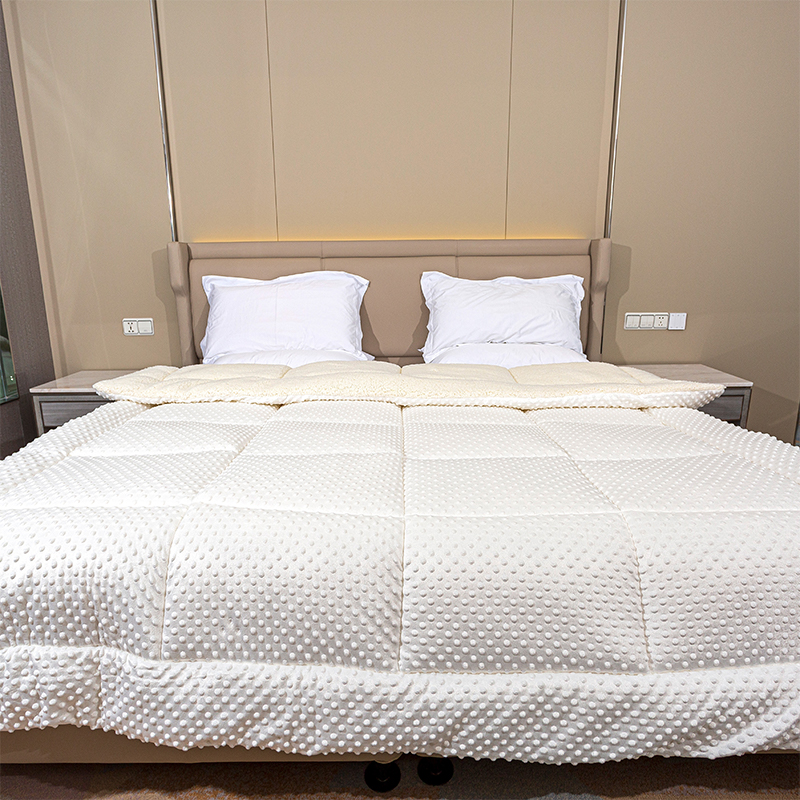
- High fill power (600–800 FP premium grade)
- Lightweight but highly insulating
- Long service life with proper care
| Criteria | Goose Down | Polyester Fiber |
| Warmth-to-Weight Ratio | Excellent | Moderate |
| Breathability | High | Medium |
| Allergy Risk | Possible (Untreated) | Low |
Durability and Maintenance
Compared with synthetic fills, goose down maintains loft longer but requires proper drying and storage to prevent clumping.
Hypoallergenic Winter Duvet Queen
What Makes a hypoallergenic winter duvet queen?
Hypoallergenic winter duvets use treated fabrics and specialized fillings to reduce dust mite growth and bacterial proliferation. Compared with untreated natural materials, these options offer safer sleep environments for sensitive users.
- Anti-dust mite treatment
- Antibacterial fabric finishing
- Low VOC production
- OEKO-TEX compliant materials
| Factor | Standard Duvet | Hypoallergenic Duvet |
| Dust Mite Resistance | Low | High |
| Antibacterial Protection | Limited | Enhanced |
| Suitable for Allergies | Conditional | Recommended |
Best Fill Types for Sensitive Sleepers
- Microfiber polyester
- Bamboo fiber blends
- Tencel fiber with moisture regulation
Winter Duvet Queen TOG Rating Guide
Understanding the winter duvet queen tog rating guide
TOG (Thermal Overall Grade) measures a duvet’s heat insulation capacity. Higher TOG ratings indicate stronger thermal retention. Winter duvets typically range from 10.5 to 15 TOG.
- 7.5 TOG: Mild winter
- 10.5–12 TOG: Standard winter
- 13.5–15 TOG: Cold climate
| TOG Rating | Room Temperature | Warmth Level |
| 7.5 | 18–21°C | Medium |
| 10.5–12 | 15–18°C | Warm |
| 13.5–15 | Below 15°C | Very Warm |
Breathable Winter Duvet Queen for Hot Sleepers
Why Choose a breathable winter duvet queen for hot sleepers?
Even in winter, some sleepers overheat. Breathable materials regulate moisture and prevent night sweats while maintaining insulation.
- Moisture-wicking bamboo fiber
- Tencel with high vapor permeability
- Advanced hollow polyester fiber
| Material | Breathability | Moisture Control |
| Bamboo Fiber | High | Excellent |
| Tencel | Very High | Superior |
| Standard Polyester | Moderate | Basic |
About Moncanol
Established in 2008 in Wuzhen, Tongxiang, Zhejiang Province, Moncanol specializes in moisture-absorbing, dust mite resistant, antibacterial, and eco-friendly bedding products. The company develops over 3,000 new products annually and operates a strict quality control system from raw materials to finished goods.
- Product range: comforters, pillows, mattress pads, allergy-resistant toppers, baby products
- Fill materials: bamboo, cotton, tencel, polyester, silk
- Full-process QC inspection
- Commitment to quality, timely delivery, and long-term partnerships
FAQ
1. What TOG rating is best for a winter duvet queen?
For cold climates, 13.5–15 TOG provides maximum insulation. For moderate winters, 10.5–12 TOG is sufficient.
2. Is goose down better than synthetic fill?
Goose down offers superior warmth-to-weight ratio, while synthetic fill is more affordable and easier to maintain.
3. Are heavy winter duvets too warm?
Heavy duvets are ideal for cold sleepers but may cause overheating for hot sleepers unless breathable materials are used.
4. How do I choose a hypoallergenic winter duvet?
Look for antibacterial treatments, dust mite resistance, and certified safe materials.
5. How long does a winter duvet last?
High-quality duvets can last 5–10 years depending on material and maintenance.
References
- British Standard BS EN 12934 – Feather and Down Requirements
- International Down and Feather Bureau (IDFB) Testing Standards
- OEKO-TEX Standard 100 Certification Guidelines
- Textile Exchange Material Sustainability Standards

 +86-18268324012
 +86-573-88798908
 Iris@zjmkn.com
 233 Huashi East Road, Wuzhen Town, Tongxiang City, Jiaxing, Zhejiang Province, China
