

 En
En  Français
 Deutsch
 عربى
عربىConsumer demand for cotton duvet queen size products has reached a multi-year high in 2025, driven by a convergence of health consciousness, sustainability priorities, and a post-pandemic shift toward premium home comfort investment. Industry data from the global home textile sector indicates that natural fiber bedding — and cotton in particular — has outpaced synthetic alternatives in both unit growth and average selling price across North American, European, and Asia-Pacific retail markets over the past 18 months. For wholesale buyers, importers, and bedding brand managers, understanding the forces behind this demand cycle — and the product specifications that define quality in the queen size cotton comforter and duvet category — is essential for competitive sourcing and product range planning in 2025 and beyond.
1. Market Update: Cotton Duvet Queen Size Demand Surges
Global Bedding Market Shifts Toward Natural Fibers
The global home textile market, valued at approximately USD 134 billion in 2024, is undergoing a structural shift toward natural and functional fiber products. Within the bedding segment, cotton duvet queen size products have emerged as one of the fastest-growing subcategories, with compound annual growth rates of 6–8% reported by major textile trade bodies including ITMF (International Textile Manufacturers Federation) and the USDA Cotton Economics Research Institute. Several factors are driving this trend simultaneously:
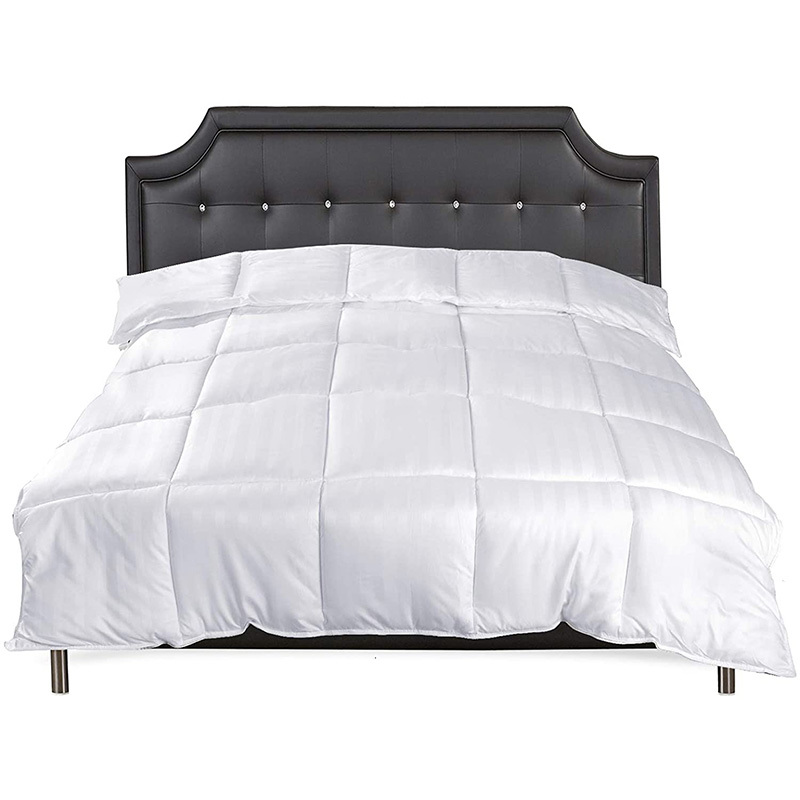
- Health and wellness purchasing: Post-pandemic consumers are investing significantly more in sleep quality. The bedroom has become a wellness space, and natural materials — particularly breathable cotton — are prioritized over synthetic polyester fills that trap heat and accumulate static charge.
- Allergy awareness: Growing consumer awareness of dust mite allergy and the role of bedding in indoor air quality has accelerated demand for breathable cotton duvet products with dust mite resistance properties, anti-bacterial treatments, and hypoallergenic fill materials.
- Sustainability purchasing criteria: Environmental certification — particularly OEKO-TEX Standard 100, GOTS (Global Organic Textile Standard), and MADE IN GREEN labeling — has shifted from a niche preference to a mainstream retail requirement. Cotton's natural biodegradability and the availability of certified organic cotton fill position the eco-friendly cotton duvet queen as the preferred choice for eco-conscious consumer segments.
- Queen size dominance: Queen size bedding (typically 220 × 240 cm or 230 × 220 cm depending on regional standard) is now the largest single size segment in the global duvet market, accounting for approximately 38–42% of total duvet unit sales across key markets — reflecting both the dominance of queen beds in North American and European bedrooms and the growth of premium bedding upgrades in emerging markets.
Retail and E-Commerce Driving New Buying Patterns
The rise of direct-to-consumer (DTC) bedding brands and the rapid expansion of home textile categories on Amazon, Wayfair, and regional e-commerce platforms have fundamentally changed the procurement dynamics for cotton duvet queen size products. Wholesale buyers and importers report that the average product development cycle has shortened from 12–18 months to 6–9 months, driven by data-informed trend identification and faster sampling and approval processes. Consumer reviews — now the primary trust signal for online bedding purchases — have elevated quality consistency requirements, as even minor fill distribution problems or stitching failures in a small percentage of units generate disproportionate negative review exposure. This has raised the bar for quality control at every stage of the supply chain.
2. What Defines a Quality Cotton Duvet Queen Size
Fill Material: Cotton Types and Their Performance
The fill material is the most critical determinant of a cotton duvet queen size product's thermal performance, weight, loft retention, and longevity. Three principal cotton fill types are commercially significant in the current market:
- Natural cotton fill (raw cotton batting): Traditional cotton batting produced from cleaned, opened cotton fiber; provides dense, heavy warmth with moderate breathability. Familiar in traditional Asian and Middle Eastern bedding markets; less popular in Western markets due to weight and poor loft recovery after washing.
- Cotton microfiber fill: Processed cotton fibers opened to a very fine, fluffy structure resembling down in loft characteristics. Significantly lighter and more resilient than traditional cotton batting; maintains loft after repeated machine washing. The dominant fill type in the modern queen size cotton comforter market for Western retail.
- Organic cotton fill (GOTS certified): Cotton grown without synthetic pesticides, fertilizers, or GMO seed stock, processed without restricted chemical auxiliaries. Carries GOTS or OEKO-TEX MADE IN GREEN certification; commands a 20–40% retail price premium over conventional cotton fill; the fastest-growing segment in the eco-friendly cotton duvet queen category.
Fill Weight: Warmth Rating Guide
Fill weight — the grams of fill per square meter or total fill weight in the duvet — is the primary specification parameter for warmth rating in a cotton duvet queen size. The following warmth rating guide reflects current European and UK TOG-equivalent standards adapted for the cotton fill category:
| Fill Weight (Queen Size Total) | Warmth Rating | Recommended Season / Room Temp | Best For |
|---|---|---|---|
| 300 – 450 g | Lightweight / Summer | Above 22°C | Warm climates, summer use, hot sleepers |
| 500 – 700 g | Medium / All-Season | 18–22°C | Temperate climates, year-round use |
| 750 – 1,000 g | Warm / Winter | 14–18°C | Cold climates, winter use, cold sleepers |
| 1,000 g+ | Extra Warm | Below 14°C | Very cold climates, unheated bedrooms |
Shell Fabric: Thread Count and Construction
The shell fabric of a cotton duvet queen size — the outer casing that contains the fill — is as important as the fill itself in determining the product's feel, durability, and market positioning. Key shell fabric specifications include:
- Thread count (TC): The number of warp plus weft threads per square inch of woven shell fabric. Higher thread count produces a finer, softer, and more tightly woven shell that resists fill migration (the tendency for fill fibers to work through the shell fabric over time). Minimum TC for a quality breathable cotton duvet shell is 233 TC; premium products use 300–400 TC; luxury products 400–600 TC.
- Weave construction: Percale (plain weave) shells are crisp, cool, and durable — favored in hotel and institutional applications. Sateen weave shells (4/1 or 5/1 float) are softer, silkier, and more lustrous — favored in premium consumer bedding.
- Down-proof finish: A calendering or resin treatment applied to the shell fabric to close the inter-thread spaces and prevent fill fiber migration. Essential for cotton fill duvets; verified by the Downproof test (DIN EN 12132-1) with a maximum of 1 fiber passing per specified test area.
Stitching and Construction Quality
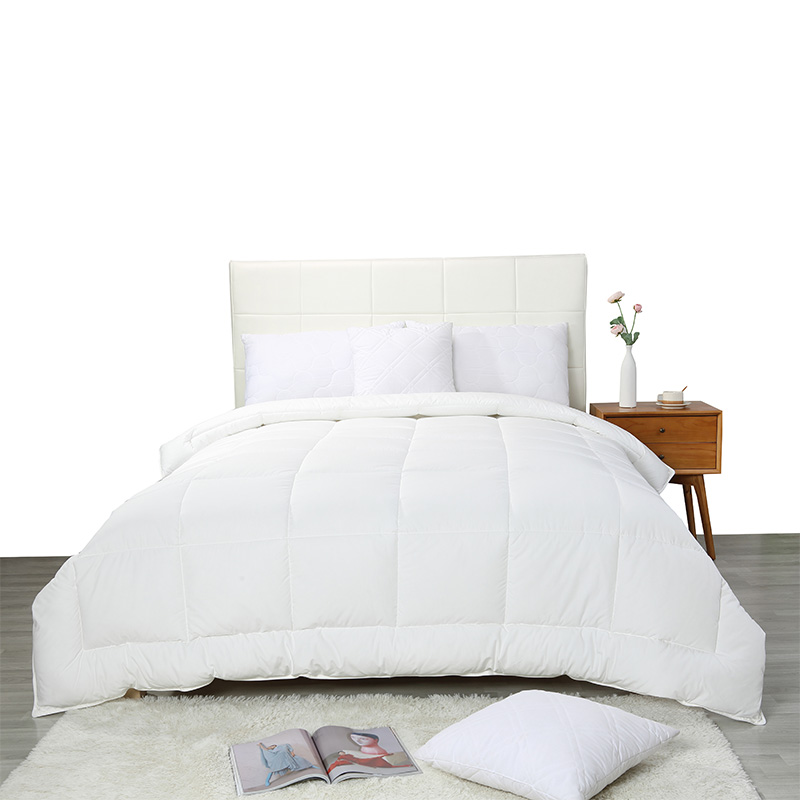
The box-stitch or baffle-box construction of a cotton duvet queen size determines how evenly the fill is distributed across the duvet surface during use and after washing. Key construction quality indicators are:
- Box stitch pattern: Sewn channels divide the duvet into individual fill compartments; typical box size 15 × 15 cm to 20 × 20 cm for cotton fill duvets. Smaller boxes prevent fill migration to duvet edges; larger boxes allow greater loft but may allow uneven fill distribution after washing.
- Stitch density: 10–14 stitches per 5 cm is the standard for quality cotton duvet construction; lower stitch density risks seam failure under the lateral tension generated during washing and tumble drying.
- Edge binding: A double-sewn, reinforced edge binding on the queen size perimeter prevents seam separation at the highest-stress points during laundering and is a key differentiator between quality-tier and commodity-tier products.
3. Cotton Duvet Queen Size: Key Certifications Buyers Must Know
In the current regulatory and consumer trust environment, certification status is no longer optional for cotton duvet queen size products targeting mainstream retail channels. The following certifications are the primary gatekeepers for market access in major consumer markets:
| Certification | What It Covers | Required For |
|---|---|---|
| OEKO-TEX Standard 100 | Harmful substance absence in all components (shell, fill, dyes, threads) | EU, US, Australian retail; most major online platforms |
| GOTS (Global Organic Textile Standard) | Certified organic cotton fiber + restricted chemical processing | Organic product claims; premium and eco-retail channels |
| OEKO-TEX MADE IN GREEN | Product-level traceability + sustainable production conditions | Premium sustainability positioning; transparent supply chain claims |
| ISO 9001:2015 | Quality management system at manufacturing facility | Professional B2B wholesale procurement qualification |
| REACH (EU) | Absence of SVHC chemicals above threshold limits | All products entering EU market |
| CA Prop 65 (US) | Absence of California-listed carcinogens and reproductive toxins | Products sold in California market |
4. Innovation Watch: New Product Developments in Cotton Duvet Category
Anti-Bacterial and Dust Mite Resistant Cotton Duvets
One of the most commercially significant product innovations in the cotton duvet queen size category in 2024–2025 is the integration of anti-bacterial and dust mite resistant treatments into both the shell fabric and the fill material. Traditional cotton bedding has historically been susceptible to dust mite colonization due to its moisture-absorbing properties creating a favorable microclimate for mite populations. New generation anti-bacterial treatments — based on silver ion technology, zinc oxide nanoparticles, or natural plant-derived antimicrobials — are now being applied to cotton fill and shell fabrics in ways that are wash-durable for 30–50 laundry cycles (verified by ISO 20743 anti-bacterial test standard) without compromising the natural cotton hand feel or chemical safety profile.
Moisture-Absorbing Functional Cotton Fill
Advanced processing of cotton fill fiber — including plasma treatment and moisture management finishing — has produced a new generation of breathable cotton duvet fills with up to 40% faster moisture absorption and 30% faster evaporative drying rates compared to standard cotton batting. These functional improvements directly address the primary consumer complaint about cotton duvets — the tendency to feel clammy during periods of high perspiration — and are driving premiumization in the all-season cotton duvet queen size category targeted at health-conscious consumers and hotel procurement programs.
Bamboo-Cotton and Tencel-Cotton Hybrid Fills
Hybrid fill constructions combining cotton with bamboo fiber, Tencel (lyocell), or mulberry silk are gaining significant commercial traction as manufacturers respond to consumer demand for products that combine cotton's familiarity and trust with the functional performance advantages of these complementary fibers. Bamboo-cotton blends offer enhanced moisture management and natural anti-bacterial properties; Tencel-cotton blends add superior softness and temperature-regulating thermoregulation; silk-cotton blends command luxury price points while providing lightweight warmth with excellent drape. These hybrid constructions are becoming an important differentiator in the premium queen size cotton comforter segment for both retail and hospitality procurement programs.
5. Wholesale Sourcing Insight: What B2B Buyers Are Prioritizing in 2025
Based on current market intelligence from global home textile trade shows including Heimtextil Frankfurt, Canton Fair, and NY NOW, the following are the primary product and supply chain priorities being articulated by wholesale buyers of cotton duvet queen size products in 2025:
- Quality consistency across production runs: The single most frequently cited sourcing challenge. Buyers require suppliers with documented QC systems covering raw material inspection, in-process quality gates, and outgoing finished product inspection — not just certification of a sample.
- Reduced MOQ flexibility: DTC brands and mid-size importers increasingly need MOQs of 200–500 units per SKU rather than the 1,000–2,000 unit minimums common among larger factories. Suppliers offering flexible MOQ structures are gaining market share in the specialty and premium segment.
- Traceability documentation: Buyers are under increasing pressure from retail customers and regulatory developments (EU Textile Labelling Regulation, US Uyghur Forced Labor Prevention Act) to document fiber origin, processing chain, and chemical compliance from raw material to finished product.
- Rapid sampling turnaround: 15–20 working day sample lead time is now the market expectation for standard queen size cotton duvet constructions; suppliers unable to meet this window are losing development opportunities to more responsive competitors.
- On-time delivery performance: With retail inventory discipline tighter than at any point in the past decade, missed delivery windows have disproportionate commercial consequences. Buyers are increasingly requesting factory production capacity confirmations and real-time order tracking capabilities.
6. Moncanol: A Trusted Supplier for Cotton Duvet Queen Size Products
Company Background
Established in 2008 and located in Wuzhen, Tongxiang, Zhejiang Province — one of China's most established home textile manufacturing clusters — Moncanol has built a 17-year track record as a specialist producer of moisture-absorbing, dust mite resistant, anti-bacterial, and eco-friendly bedding products. The company's focus on functional performance and environmental responsibility positions it directly in the product categories seeing the strongest wholesale demand growth in 2025: natural fill duvets, allergy-resistant bedding, and eco-certified home textile products.
Product Range and Innovation Capacity
Moncanol's product development capability is a key differentiator in the competitive cotton duvet queen size wholesale market. The company develops more than 3,000 new products each year — a pace of innovation that enables wholesale buyers to access a continuously refreshed product pipeline rather than a static catalog. The full product range addresses the complete bedding ecosystem that wholesale buyers require for comprehensive category management:
- Comforters and pillows filled with cotton, bamboo, Tencel, silk, and polyester — covering the full fill material spectrum demanded by different market segments
- Mattress pads, allergy resistant waterproof toppers, and mattress protectors — addressing the growing functional bedding protection category
- Baby products and pregnancy products — specialty categories with strict safety certification requirements that Moncanol is fully equipped to meet
- Duvet cover sets and fashion cushions — enabling wholesale buyers to source complete bedroom ensembles from a single supply partner
Quality Control System
Moncanol's QC department controls quality from raw material receipt through every stage of the production process to finished product outgoing inspection — a comprehensive quality management approach that directly addresses the consistency concerns that are the primary driver of supplier switching behavior among wholesale buyers. All products are individually inspected before shipment, and the company's commitment to reliable delivery at the right price and the right time reflects a commercial philosophy aligned with the operational requirements of professional wholesale and import customers worldwide.
7. Frequently Asked Questions (FAQ)
Q1: What size is a queen size cotton duvet?
A cotton duvet queen size typically measures 220 × 240 cm (approximately 88 × 94 inches) in European standard sizing, or 230 × 218 cm (90 × 86 inches) in US standard queen sizing. Some manufacturers offer an oversized queen (sometimes called "Olympic queen" or "super queen") at 240 × 240 cm for beds with deeper mattresses or for buyers who prefer generous overhang on both sides. Always confirm the regional size standard with the supplier when sourcing, as queen dimensions are not universally standardized across markets.
Q2: Is a cotton duvet better than a polyester duvet?
A queen size cotton comforter or duvet offers significant advantages over polyester fill for consumers prioritizing natural comfort, breathability, and sustainability. Cotton fill allows better moisture vapor transmission — absorbing perspiration and releasing it gradually — preventing the overheating and clamminess that polyester fill generates for many sleepers. Cotton is naturally hypoallergenic when treated with dust mite resistant processing, biodegradable, and available with GOTS organic certification. Polyester duvets have advantages in price and in loft recovery after washing. For the premium and eco-conscious market segment, cotton consistently outperforms polyester in consumer preference surveys and product review performance.
Q3: How do I wash a cotton duvet queen size?
Most cotton duvet queen size products are machine washable at 40°C (recommended to preserve fill loft and shell fabric integrity) in a large-capacity front-loading machine — a top-loading agitator machine can stress the shell seams under the weight of a wet queen size duvet. Use a mild liquid detergent; avoid fabric softener, which coats cotton fibers and reduces breathability over time. Tumble dry on medium heat with two or three clean tennis balls or dryer balls to break up fill clumping as the duvet dries. Ensure the duvet is completely dry before storage to prevent mold formation in the fill. Check the specific care label on the product, as fill weight and shell construction may affect recommended wash temperature.
Q4: What certifications should a wholesale cotton duvet queen size carry?
For wholesale buyers sourcing cotton duvet queen size products for EU and North American markets, the minimum certification requirements are OEKO-TEX Standard 100 (harmful substance testing across all components) and REACH SVHC compliance. For organic product lines, GOTS certification covering both fiber origin and chemical processing is required. For products making anti-bacterial or dust mite resistant claims, ISO 20743 (anti-bacterial) and relevant mite resistance test documentation from an accredited laboratory should be requested. Suppliers should provide current, valid certificate copies — not expired certificates — as part of the standard qualification documentation package.
Q5: What is a good fill weight for an all-season cotton duvet queen size?
For an all-season breathable cotton duvet in queen size, a fill weight of 500–700 grams total is the standard recommendation for temperate climate markets (Western Europe, northern US, Canada) in rooms maintained at 18–22°C. For warmer climates or for use in centrally heated bedrooms above 22°C year-round, a lighter 300–450 gram fill is more appropriate. For cold climate markets or unheated bedrooms, a 750–1,000 gram fill provides the warmth retention needed for comfortable sleep. The all-season approach can also be addressed with a two-duvet system: a lightweight summer cotton duvet (300–400 g) and a medium-weight autumn/winter duvet (600–800 g) that can be used separately or together, covering the full temperature range with two purpose-specific products.
References
- ITMF — International Textile Manufacturers Federation. Annual Conference Report 2024: Natural Fiber Market Trends. ITMF, Zurich, 2024. Available at: https://www.itmf.org
- OEKO-TEX Standard 100, Edition 2024. OEKO-TEX Association, Zurich. Available at: https://www.oeko-tex.com/en/our-standards/oeko-tex-standard-100
- Global Organic Textile Standard (GOTS), Version 7.0. GOTS, 2023. Available at: https://global-standard.org
- ISO 20743:2021 — Textiles: Determination of Antibacterial Activity of Textile Products. International Organization for Standardization, Geneva.
- DIN EN 12132-1:2010 — Textiles: Feathers and Down: Determination of Resistance to Passage of Feathers and Down Through Fabrics. Deutsches Institut für Normung, Berlin.
- ISO 105-C06:2010 — Textiles: Tests for Colour Fastness to Domestic and Commercial Laundering. ISO, Geneva.
- REACH Regulation (EC) No 1907/2006. European Chemicals Agency (ECHA), Helsinki. Available at: https://echa.europa.eu/regulations/reach
- Kadolph, S.J. (2010). Textiles, 11th Edition. Pearson Education, Upper Saddle River, NJ. ISBN 978-0-13-511101-2.
- Heimtextil Trend Report 2025. Messe Frankfurt Exhibition GmbH, Frankfurt, 2024. Available at: https://heimtextil.messefrankfurt.com
- USDA Agricultural Marketing Service. Cotton Grading and Classification Standards. USDA AMS, Washington DC, 2023. Available at: https://www.ams.usda.gov/cotton

 +86-18268324012
 +86-573-88798908
 Iris@zjmkn.com
 233 Huashi East Road, Wuzhen Town, Tongxiang City, Jiaxing, Zhejiang Province, China
